
Periodontal care for gums and supporting bone
Gum Disease Treatment
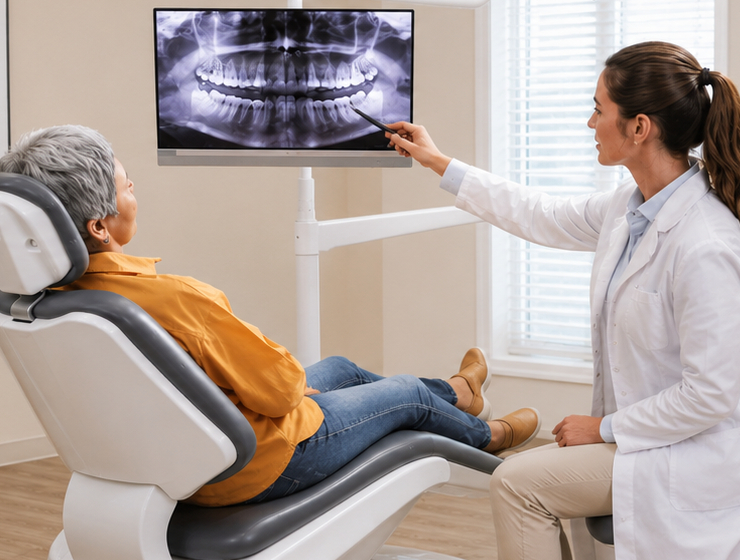
Gum disease treatment is used to manage inflammation, infection, and bone loss around the teeth, with care focused on controlling the disease and protecting long-term tooth support.
- Gum and bone health assessment
- Scaling and root planing care
- Long-term maintenance planning
Why gum disease treatment matters
The goal is to control the disease early enough that the teeth keep their support.
Reduce plaque and calculus below the gumline
Treatment focuses on removing the bacteria and hardened deposits that drive inflammation around the teeth.
Protect the supporting bone
Untreated gum disease can lead to bone loss around teeth, so early treatment is about preventing that support from worsening.
Control disease progression
The source page describes periodontal treatment as something that can slow, stop, or control progression depending on the stage.
Help keep teeth more stable
Managing gum disease helps reduce the risk of teeth becoming loose as gum and bone support deteriorate.
Build a long-term maintenance plan
Professional treatment works best when combined with strong home care and regular review over time.
How treatment usually works
Periodontal care is usually a process of assessment, cleaning below the gumline, and ongoing maintenance.
The source content describes gum disease as inflammation and infection of the gums and supporting structures caused by plaque and calculus buildup. Treatment is aimed at removing those irritants and helping keep the disease under control long term.
- 1
Step 1
Assess the gum condition and pocketing
We begin by checking the gums, tooth support, and any signs that plaque and calculus have already affected the surrounding tissues.
- 2
Step 2
Remove bacteria and calculus
Scaling is used to remove bacteria and hardened deposits from around and below the gumline.
- 3
Step 3
Clean and smooth the root surfaces
Root planing may be used to clean the tooth roots and remove plaque, tartar, and damaged cementum.
- 4
Step 4
Use additional treatment where needed
Depending on the case, treatment may also involve medications, antimicrobial mouth rinses, or surgical procedures.
- 5
Step 5
Maintain results with home care and recalls
Long-term success depends on daily brushing, flossing, and regular dental visits after the active treatment phase.
What your appointment covers
Clear steps, without guesswork.
- Assess the gum condition and pocketing
- Remove bacteria and calculus
- Clean and smooth the root surfaces
- Use additional treatment where needed
- Maintain results with home care and recalls
Every stage is planned around your comfort, clinical needs, and the next step that makes sense for your care.
Bleeding gums or signs of gum recession?
Book a gum health review before quiet inflammation becomes harder to reverse.
Gum disease can progress with surprisingly little discomfort, so early review matters when the gums feel different or look different.
When treatment is usually discussed
These are the signs and stages the source page points to.
Gum disease can start with mild inflammation and then progress into periodontitis, where there is irreversible bone loss around the teeth.
Plaque and tartar build-up near the gums
Plaque forms quickly after brushing, and once it hardens into calculus it can keep irritating the gum tissues.
Inflamed or infected gums
Gum disease is described as inflammation and infection affecting the gums and supporting structures of the teeth.
Deep gum pockets
As disease progresses, gum pockets can form and act as reservoirs for bacteria around the roots.
Gum recession or loose teeth
Advanced disease can lead to recession, loss of bone support, and teeth becoming loose.
You have been told you have periodontitis
The source page distinguishes periodontitis as the advanced stage involving irreversible bone loss.
Symptoms are minimal but the gums are changing
Periodontitis is often painless, which is why patients sometimes do not realise how much damage has already occurred.
Periodontal maintenance
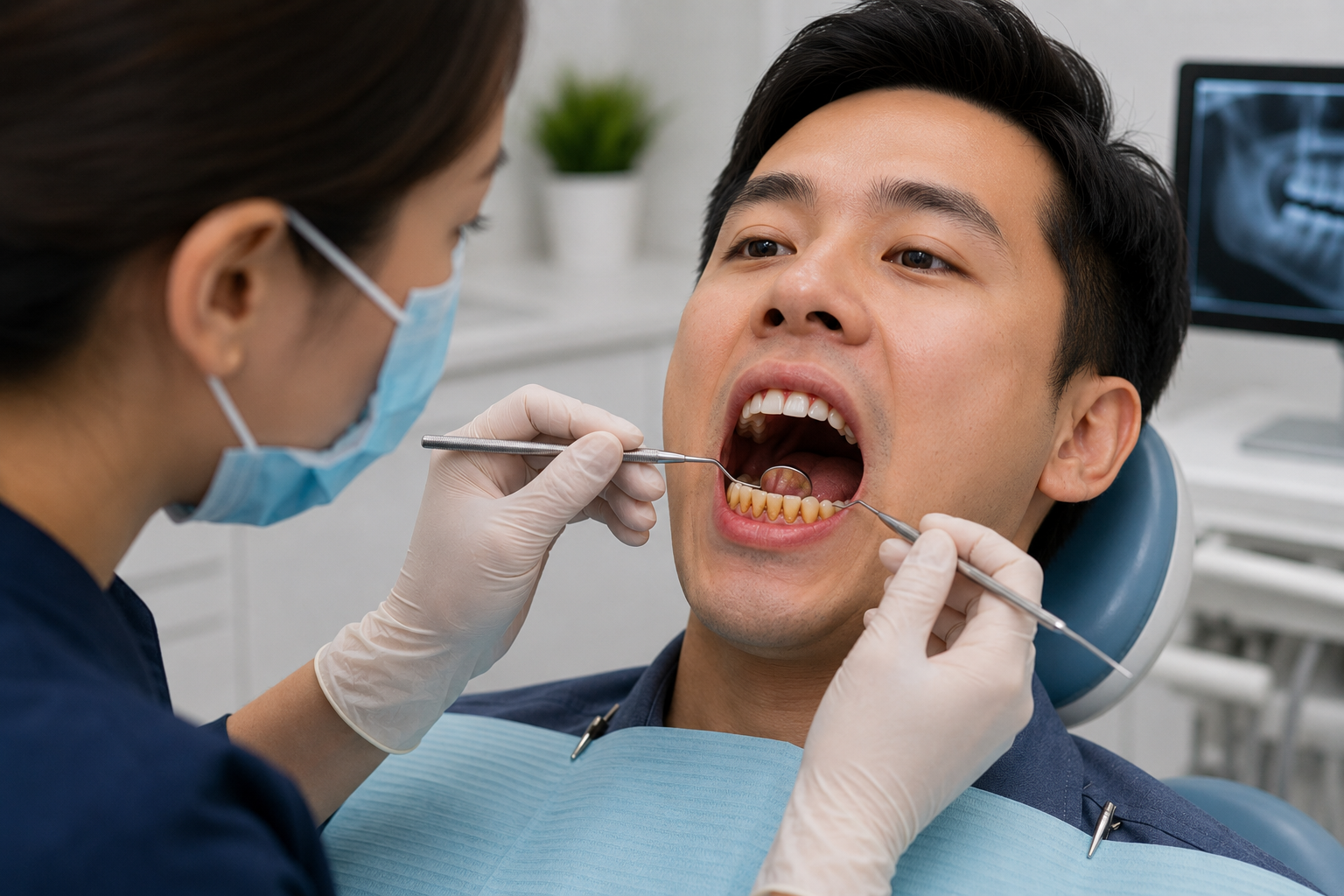
The treatment does a lot, but daily care still matters every day after it.
Professional periodontal treatment works best when it is paired with consistent home care and recall visits.
Gingivitis versus periodontitis
Not all gum disease is at the same stage, and that affects the treatment conversation.
The source page separates early gum inflammation from periodontitis, where bone support has already been lost. The practical point for patients is that professional treatment can help control disease progression, but earlier stages are simpler to manage than advanced ones.
- Plaque hardens into calculus, and that buildup around or below the gumline can drive inflammation and pocketing.
- Periodontitis involves irreversible loss of the bone supporting the teeth and often progresses with little pain.
- Treatment may include scaling, root planing, medications, antimicrobial rinses, and in some cases surgical care.
Common questions
Gum disease treatment questions, answered clearly.
These are the practical questions patients usually ask when they are told the gums need more than a routine clean.
Related services
Related care patients often explore alongside this service.
Depending on your goals and clinical needs, these are other treatments patients commonly consider with us.

Dental Hygiene
Professional dental cleanings, scale and polish, and preventive care to maintain healthy teeth and gums.

Tooth Extractions
Sometimes if a tooth is beyond repair due to advanced decay, damage, or gum disease, extraction may be recommended to protect your oral health and prevent further complications.
Dental Implants
Missing teeth? Let's fix that! Dental implants are a permanent solution that look and feel like natural teeth! Whether you've lost a tooth/teeth due to injury, decay, or age, implants can restore your smile and confidence!
Dentalini
Have the gums assessed early if they are changing, because gum disease is easier to control before support is lost.
Book online or contact the clinic to discuss gum disease treatment, periodontal cleaning, and long-term maintenance care.