
You expected the tooth to feel different after a filling, but you may not know which changes to mention. A sensitive drink, an uncomfortable bite and swelling are different observations. Tell the practice what you notice rather than trying to name the problem before an examination.
Healthdirect recommends a dental review when sensitivity remains after a few days. Dentalini's filling service includes shaping, bite adjustment and polishing, but a change after treatment still needs assessment. Explain when the work was done, whether symptoms are changing and how your teeth meet when you close your mouth. (Healthdirect: after a filling Dentalini: filling service)
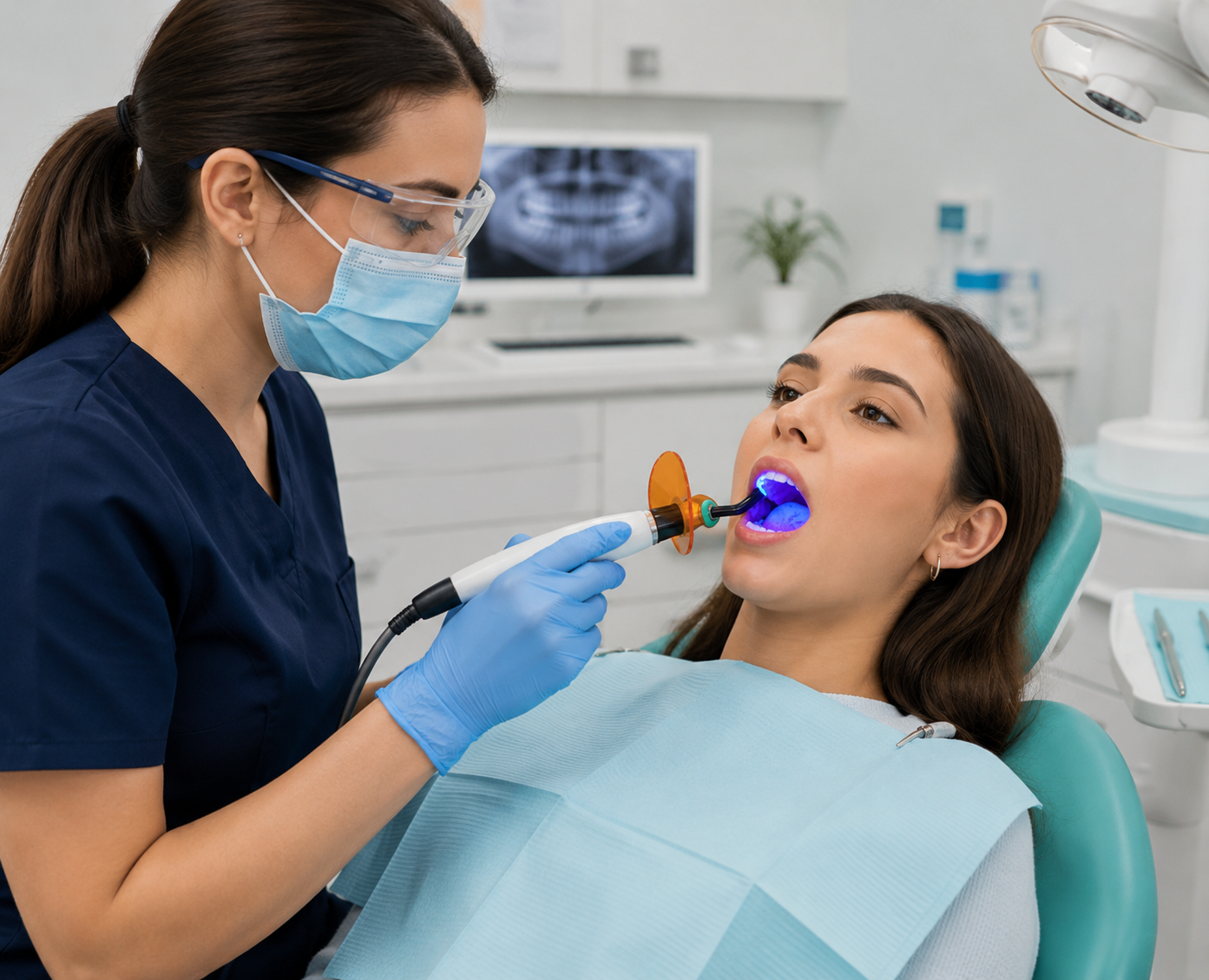
How long can a filled tooth feel sensitive?
The ADA says temperature and biting sensitivity can happen after a filling. It commonly eases within days and sometimes lasts one or two weeks. The same guidance says to return if it continues or worsens. That description is about possible experience; it does not identify what is happening in your tooth. (ADA: filling sensitivity)
Healthdirect advises another dental visit if sensitivity remains after a few days. Use that earlier contact point rather than treating the ADA's longer possible duration as a reason to postpone advice. You can ask for help without knowing whether the symptom will turn out to be temporary or require further care. (Healthdirect: after a filling ADA: filling sensitivity)
Describe pain on biting separately from temperature sensitivity. Healthdirect includes biting pain among reasons to see a dentist, alongside swelling, fever, swallowing difficulty and a bad taste. These details matter more than calling the symptom “normal” or “abnormal” without someone assessing the tooth and the rest of your mouth. (Healthdirect: toothache assessment)
What does a different bite tell me?
It tells you something to report, rather than which treatment to request. Dentalini describes checking and refining the bite at the end of a filling procedure. If it feels different afterwards, explain that change and ask for review. The existence of a bite-adjustment step does not establish that adjustment is the whole answer now. (Dentalini: filling service Healthdirect: toothache assessment)
- For example, you could say: “Since the filling, I notice this tooth first when I close my mouth. It is also uncomfortable to chew on that side.”
- Give the date and say whether there is any swelling. You do not need to repeatedly bite hard to produce a more detailed description.
Healthdirect explains that a dentist assesses toothache through an examination, history and, when needed, an X-ray. Symptoms can have several causes. An appointment can investigate the source of discomfort in a way that a description of the filling's appearance or a photograph alone cannot establish. (Healthdirect: toothache assessment)
When should I seek urgent care?
Breathing or speaking difficulty, or swelling around the eye or neck with toothache or gum swelling, needs emergency medical care. Healthdirect identifies these as emergency signs. Use emergency help rather than waiting for a routine appointment or a reply to an online enquiry about your recent filling. (Healthdirect: emergency signs)
Tell the dentist promptly about swelling, fever, trouble swallowing, pain on biting or a bad taste. Dentalini's emergency service describes assessment for sudden pain, swelling and dental trauma. Availability varies, so call (02) 8920 3000 to explain the problem and ask about the appropriate appointment. (Healthdirect: toothache assessment Dentalini: urgent assessment)
Persistent toothache also deserves attention. Healthdirect advises seeing a dentist as soon as possible when it lasts beyond two days or does not improve with pain relief. A recent treatment date should be part of the history, rather than a reason to leave out symptoms that would otherwise concern you. (Healthdirect: toothache assessment)
Which details help the appointment conversation?
Use this checklist to prepare your account. It separates what happened at the appointment from what you have noticed since. You can bring a short note on paper or your phone. It is not a scoring system and does not determine the urgency or cause by itself.
- Record when the filling was done and which tooth or side was treated, if you know.
- Note whether cold, heat, chewing or closing your teeth brings on the symptom.
- Say whether it is improving, unchanged, more frequent or more intense.
- Mention swelling, fever, swallowing problems or any bad taste before the routine questions.
- Bring the aftercare instructions and a current medicine list to discuss with the dentist.
Dentalini's hygiene service includes reviewing health history and assessing teeth, gums, bite and restorations. Healthdirect likewise describes medical and dental history as part of toothache assessment. Tell the team about relevant conditions and medicines; a return visit should use your current information, even if you have attended before. (Dentalini: preventive visit Healthdirect: toothache assessment)
What can I do while arranging dental advice?
General toothache guidance from Healthdirect includes softer foods that are easier to chew, avoiding very hot or cold drinks, and keeping your mouth clean with a soft toothbrush and fluoride toothpaste. Apply your treating dentist's specific aftercare instructions as well. Interim care does not determine whether a filling needs further work. (Healthdirect: interim care)
Ask your doctor or pharmacist about appropriate pain relief and follow the product directions. This is especially useful if you take other medicines or have health conditions. Reducing discomfort for a time does not explain its cause or replace the dental assessment described in the guidance. (Healthdirect: interim care)
If your original instructions are missing, contact the treating clinic and explain what needs clarifying. Ask about eating and cleaning in relation to the material and treatment you actually had. A friend's aftercare timetable may describe a different procedure, so this article does not supply one universal waiting period.
Will I need the filling replaced?
Not every symptom tells you that a new filling is needed. Different materials and damaged areas require different decisions. Better Health Channel explains that materials have benefits and limitations; Dentalini says its dentist assesses the tooth before choosing the restoration. Ask what the examination shows before assuming the next appointment is another filling. (Better Health Channel: filling options Dentalini: filling service)
A filling that breaks or comes out is a reason to see an oral health professional as soon as possible, according to Better Health Channel. Tell reception if you have noticed missing material. That is a different observation from sensitivity with an apparently intact filling, although both can be raised in the same call. (Better Health Channel: broken fillings)
| What you notice | What it helps you ask |
|---|---|
| A sensitive drink | Does this symptom need review now, and what should I do while arranging it? |
| A changed bite | Can you assess the way the teeth meet and the source of the discomfort? |
| Missing material | How soon should the damaged area be assessed, and should I bring the piece? |
| Swelling or fever | Which urgent service should I use for the symptoms I have described? |
What will Dentalini do at a return visit?
The published emergency pathway starts with your account of the symptoms and when they began, then assessment of the tooth, gum and any swelling or injury. The next step depends on the cause. Temporary care or later restorative treatment may be discussed, but the article cannot promise a particular treatment at one appointment. (Dentalini: urgent assessment)
For filling treatment itself, Dentalini describes assessment, anaesthetic when used, removal of damaged material, preparation, placement, curing, bite adjustment and polishing. This is background about the service, not a claim that all these stages will be repeated at a review. Ask which part of the plan applies to you. (Dentalini: filling service)
Before leaving, ask what was found, what the proposed care is intended to address, whether alternatives apply and what changes should prompt another call. If you are unsure about an instruction, ask for it again in writing. You can also ask which part of the plan is urgent and which is a later discussion.
How should I understand a temporary filling?
The ADA explains that temporary fillings may be used between stages of care, during emergency treatment or when treatment cannot be completed in one visit. If that applies to your appointment, ask about the next stage and its timing. The word “temporary” does not by itself explain ongoing symptoms or replace the review advice above. (ADA: temporary fillings)
Tell reception about an already planned appointment when you call. Ask whether the new symptom changes what you should do before then, rather than assuming the existing date covers every change. Keep the written plan with your aftercare instructions so you can distinguish the intended next step from a new concern.
A point from the official guidance
“Each different material has benefits and limitations.”
Better Health Channel, Better Health Channel: filling options; accessed 24 October 2026.
How do I check fees and benefits?
Dentalini says it provides treatment estimates with item codes and costs before treatment. Ask about the fee for assessing the tooth as well as any further procedure. Its payment page says health insurance may cover part of the cost and directs you to confirm benefits with your insurer. (Dentalini: itemised estimates)
| Before agreeing | Ask for this information |
|---|---|
| Assessment | The visit fee and what it includes. |
| Further work | The proposed treatment, item codes and total estimated costs. |
| Insurance | A fund estimate using those items, rather than an assumed rebate. |
| Follow-up | The purpose, timing and possible fees for another appointment. |
Dentalini is at Suite 3, 118 Alfred St South, Milsons Point NSW 2061. The contact page lists Saturday hours of 8.30am to 2pm; confirm current availability when you call. Use the contact page, filling service and urgent-care information for the relevant clinic details. (Dentalini: contact)
Call (02) 8920 3000 and say: “I had a filling on this date and want advice about ongoing sensitivity or a change in my bite.” Give any urgent symptoms first. That gives the team a practical starting point without deciding in advance what treatment you need. (Dentalini: contact)
Sources
General published guidance, not personal advice. Sources checked on 24 October 2026.
- Healthdirect: after a filling. Source observed 2026-10-24.
- Dentalini: filling service. Source observed 2026-10-24.
- ADA: filling sensitivity. Source observed 2026-10-24.
- Healthdirect: toothache assessment. Source observed 2026-10-23.
- Dentalini: urgent assessment. Source observed 2026-10-24.
- Dentalini: preventive visit. Source observed 2026-10-24.
- Better Health Channel: filling options. Source observed 2026-10-24.
- Dentalini: itemised estimates. Source observed 2026-10-24.
- Dentalini: contact. Source observed 2026-10-24.
Reference: www.betterhealth.vic.gov.au.