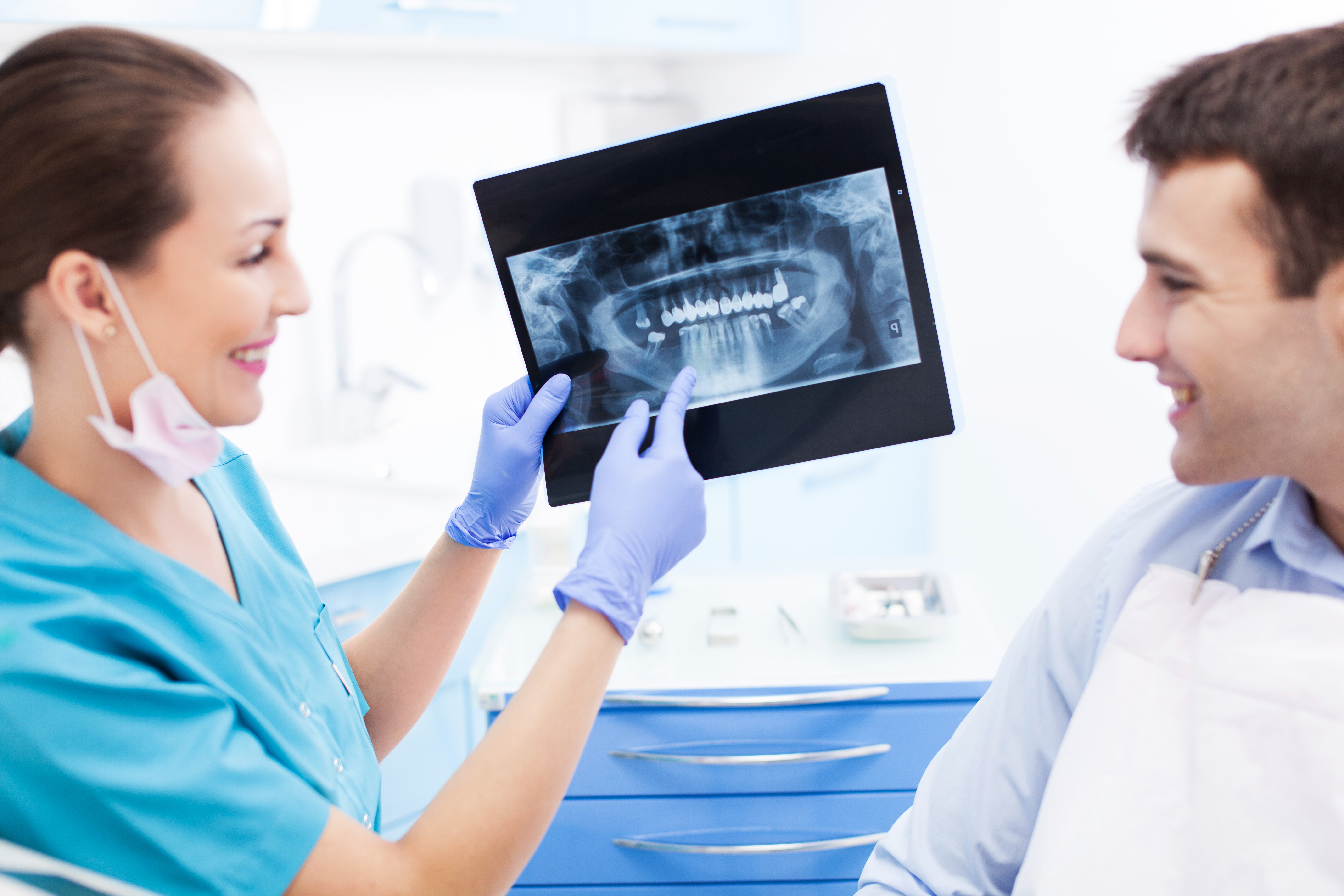
You are pregnant, or think you might be, and your dentist has suggested an X-ray. It is fair to wonder whether to say yes, say no, or ask for it to wait.
The short answer
No, you do not need to refuse an X-ray automatically. The Australian Dental Association says needed dental X-rays can be taken during pregnancy. At Dentalini, a hygiene visit starts with your medical history and any changes since your last visit, so tell us you are pregnant first and ask what the image is for. (ADA: pregnancy; Dentalini: hygiene visits)
Tell the team you are pregnant or may be pregnant
Tell your dental team about your pregnancy, or the possibility of one, before any image is taken. The Australian Dental Association (ADA) pregnancy page asks patients to let their dentist know. That includes very early pregnancy, when you may not have told many people yet.
Knowing helps the dentist decide whether an image is needed at this visit, which type suits the question, and whether timing can be adjusted for your comfort. It also puts your pregnancy stage into your notes, so the next visit starts from the same place.
You do not need to prepare a speech. "I'm pregnant" or "I might be pregnant" is enough. If you are unsure, say that instead. Your dentist can talk through the options with you rather than guess.
Why the dentist wants this particular image
An X-ray answers a specific question, so ask what that question is. The ADA's dental X-ray page explains that the type of image depends on what your dentist needs to find out. A question about the space between two teeth is not the same as a question about the root of a painful tooth, and the image that suits one may not suit the other.
On pregnancy specifically, the ADA says: "Dental x-rays are often needed to help your dentist provide you with safe care. These x-rays can be taken during pregnancy." (Australian Dental Association, pregnancy page, undated live page, checked 25 October 2026.)
That statement does not say every X-ray should be taken, and it does not say none should. It says pregnancy does not rule out an image that is needed. The word "needed" carries the weight, which is why the purpose matters. The ADA's X-ray page also describes modern dental X-ray doses as low. That is general information about dental imaging, not a measure of your own situation, so your dentist's individual assessment still counts.
A helpful answer from your dentist sounds like this: "I want to look at this tooth because of this symptom, and what we see will change what we do next." If the answer is closer to "it is just due", that is a fair moment to ask whether it could wait.
Routine records, pain and urgent concerns are different situations
Images are taken for different reasons, and the right choice can differ with each.
- Routine records. These help keep your records current or follow a regular schedule. If nothing is bothering you, ask whether this one can wait, or whether recent images from another dentist already answer the question.
- A symptom you can feel. Pain, swelling, a broken tooth, a lost filling or a gum problem can all be reasons for an image. Your dentist may need it to work out what is happening, and waiting is not always the more comfortable option.
- Something urgent. If you have significant pain or swelling, call the practice and say you are pregnant. Ask what the options are, including what needs attention now and what could be left until later.
NSW Health MotherSafe at the Royal Hospital for Women (2020) says dental check-ups and cleaning can be carried out at any stage of pregnancy, and that necessary dental imaging should not simply be put off because of pregnancy. You can read it in the MotherSafe dental treatment leaflet. Again, the key word is "necessary". Routine and necessary are different, and your dentist can tell you which one applies to you.
If tooth pain is the reason for your visit, our article on how to know if you may need root canal treatment may help you prepare.
Standard views versus 3D imaging: ask before generalising
Ask which type of image is planned. A standard dental X-ray and a 3D scan (cone beam computed tomography, or CBCT) are different kinds of imaging. They answer different questions, so anything you read about one should not be assumed to apply to the other.
This article does not give dose figures for either type, because dose depends on the equipment and settings and we have not verified figures that would apply to you. It also does not say which imaging systems any particular clinic has. The ADA's X-ray page notes that some types of imaging need a referral, so the practice you visit may or may not take a given image itself.
Useful questions here:
- Is this a standard X-ray or a 3D scan?
- Why is this type needed for my question?
- Could a different type, or a later date, answer it?
Second trimester: comfort, not a universal window
You may read that the second trimester is the time to book dental work. The ADA says that stage can be more comfortable for dental visits, but it does not describe it as the only time dental care is permitted. Comfort and clinical need are separate questions.
Nausea in early pregnancy, or finding it hard to lie back later on, can reasonably affect when you book or how the chair is set up. Those are good reasons to adjust timing or positioning. They do not turn a needed image into one that must wait for a particular stage. Equally, some websites call one stage the "safest" window. The ADA page does not say that, and neither do we.
When you talk to your dentist, use trimester language or the stage your maternity provider has given you. If you are not sure, say that.
Why apron advice can sound different
You may have had a lead apron placed over you at one clinic and not at another. Both can be following guidance, and the sources themselves are not identical.
The 2020 MotherSafe leaflet refers to a usual lead apron. The ADA's X-ray page says, citing advice from ARPANSA (the Australian radiation protection agency), that shielding is not routinely required. The MotherSafe document is dated 2020, while the ADA page is a live, undated page we checked on 25 October 2026. We have given weight to the live ADA wording, but we cannot tell you which approach a given practice follows.
So treat the apron as a question rather than a test of quality. Ask what the practice does and why. If you would feel more comfortable with one, say so.
How Dentalini's history-first visit helps the conversation
At Dentalini, a hygiene visit starts with your medical history, your oral health concerns and any changes since your last visit. After that, the team looks at your teeth, gums, bite and jaw joints.
Pregnancy is exactly the kind of change that belongs in that first conversation. It means you can talk about it before anyone decides on an image, rather than being asked mid-appointment.
This article is written by Dr Preeti R. Bharadwaj, owner and principal dentist at Dentalini since 2013. It does not describe any particular X-ray equipment at Dentalini. If you want to know what would be used for your situation, ask when you call.
Questions to ask, and why they matter
| Question to ask | Why it matters |
|---|---|
| What is the purpose of this image? | It shows whether the image answers a symptom or a clinical question, or is routine. |
| Is it a standard X-ray or a 3D scan? | The two are different types of imaging, so advice about one does not carry over to the other. |
| Can my earlier images be used? | Recent images from another dentist may already answer the question, and some types need a referral. |
| Is this urgent, and what are my options? | It separates what needs attention now from what could wait, and it opens a discussion of alternatives. |
| What can be done about positioning and comfort? | Nausea or lying back can be uncomfortable, and the team can plan around it. |
Five questions to ask at your visit
- What question are you hoping this image will answer?
- Is it a standard X-ray or a 3D scan?
- Would the result change what we do, and could it wait until after the baby arrives?
- Can you use images from my previous dentist, and how do I request them?
- What do you do about shielding, and what can you adjust to make me comfortable?
Your bring-to-the-visit checklist
- Your pregnancy stage, or that you might be pregnant
- Current medicines, and any advice from your maternity provider
- Your symptoms, and when they began
- Details of your previous dentist and any earlier imaging
- Any comfort or nausea concerns
- Your questions about how the image would change your care
Questions about a medicine belong with your prescriber or maternity provider. We would never suggest you stop or change one because of a dental visit.
When to contact us
Call Dentalini on 02 8920 3000 if you are pregnant and have a dental symptom, or want to talk through an X-ray before your appointment. You could say: "I'm pregnant and I'd like to talk about whether I need an X-ray." We are at Suite 3, 118 Alfred St South, Milsons Point NSW 2061. The visit page says the team can give detailed directions or meet you at the station.
Frequently asked questions
Should I decline dental X-rays because I'm pregnant?
Not automatically. The ADA says needed dental X-rays can be taken during pregnancy. The useful step is to tell your dentist you are pregnant and ask what the image is for, what type it is and whether it could wait. Your dentist can then discuss your individual situation with you.
Is the second trimester the only time I can have dental care?
No. The ADA describes the second trimester as a stage that can be more comfortable, but it does not present it as the only permitted time. NSW Health MotherSafe says check-ups and cleaning can be carried out at any stage of pregnancy. Timing is a conversation between you and your dentist.
Do I need a lead apron for a dental X-ray while pregnant?
Advice differs between sources, which is why you may hear different things from different dentists. The ADA's X-ray page says shielding is not routinely required, citing ARPANSA advice, while an older 2020 MotherSafe leaflet refers to a usual lead apron. Ask your dentist what they do and why, and say so if you would feel more comfortable with one.
Can routine X-rays wait until after my baby arrives?
Ask your dentist whether the image is needed now or could wait. If you have symptoms such as pain or swelling, an image may help your dentist find the cause. The decision depends on the clinical question and your individual assessment, not pregnancy alone.
What if I'm not sure whether I'm pregnant?
Say so at the start of the visit. "I might be pregnant" is enough information for your dentist to pause and talk through whether an image is needed at this appointment. You can also let them know if you are waiting on a test or advice from your maternity provider.
Sources and scope
- Australian Dental Association: Pregnancy and dental care (undated live page)
- Australian Dental Association: Dental X-rays (undated live page)
- NSW Health MotherSafe, Royal Hospital for Women: Dental treatment in pregnancy and breastfeeding (2020)
- Dentalini: Our team, Dental hygiene and Visit us
Sources checked 25 October 2026. This article is general information, not personal advice. Whether an X-ray is needed, which type and when depends on your own health and your dentist's assessment.