
Custom porcelain tooth repair
Dental Inlays and Onlays
Dental inlays and onlays are custom-made porcelain restorations used when a cavity is too large for a regular filling and the tooth needs extra strength, support, and a carefully shaped repair.
- Porcelain repairs for larger cavities
- Custom lab-made restorations
- Strength and shape restoration

Why patients choose inlays and onlays
They sit between a regular filling and a full crown when the tooth needs more support than a direct repair can offer.
Repair larger cavities
Inlays and onlays are described as ideal when a cavity is too large for a regular filling.
Add strength and support
These restorations are used when the tooth needs reinforcement while preserving more of the remaining structure than a full crown may require.
Restore tooth shape and chewing function
The source page notes that they are designed to restore the chewing surface and natural tooth form.
Use a custom-made porcelain restoration
The restoration is fabricated in a dental laboratory rather than placed directly in the mouth in one appointment.
Gain a more durable indirect repair
Because they are made outside the mouth from high-strength materials, the source page describes them as stronger and more durable than direct fillings.
How treatment usually works
This is typically a two-visit treatment because the final restoration is made in the lab.
The tooth is prepared and recorded at the first visit, then the final inlay or onlay is cemented into place at the second visit once the laboratory fabrication is complete.
- 1
Step 1
Assess whether a filling is no longer enough
We first determine whether the cavity or damaged area is too large for a regular direct filling to be the best long-term option.
- 2
Step 2
Prepare the tooth
At the first visit, the tooth is prepared so the restoration can fit accurately and support the remaining structure.
- 3
Step 3
Take impressions or records
Records are taken at the first visit so the inlay or onlay can be custom fabricated in the laboratory.
- 4
Step 4
Fabricate the restoration outside the mouth
The porcelain restoration is made using high-strength materials in the lab rather than directly on the tooth in one sitting.
- 5
Step 5
Cement the final restoration in place
At the second visit, the completed inlay or onlay is fitted and cemented to restore the tooth's form and function.
What your appointment covers
Clear steps, without guesswork.
- Assess whether a filling is no longer enough
- Prepare the tooth
- Take impressions or records
- Fabricate the restoration outside the mouth
- Cement the final restoration in place
Every stage is planned around your comfort, clinical needs, and the next step that makes sense for your care.
Need more than a regular filling?
Book a consultation if the tooth needs a stronger repair without jumping straight to a crown.
We can assess the cavity size, remaining tooth structure, and whether an inlay or onlay is the right middle ground.
When they are usually considered
These are the main situations that point toward an inlay or onlay discussion.
The treatment is most relevant when a direct filling may not provide enough support but the tooth does not necessarily need a full crown.
The cavity is too large for a regular filling
This is the clearest use case called out in the existing service page.
The tooth needs extra structural support
An inlay or onlay may be considered when the remaining tooth needs more reinforcement than a direct filling can offer.
You want the chewing surface restored accurately
These restorations are designed to rebuild the tooth's natural form and biting surface carefully.
You need a custom-made indirect restoration
Because the repair is fabricated in the lab, it can be planned more precisely than a same-visit direct material placement.
Durability is a major factor
The source page specifically presents inlays and onlays as stronger and more durable than direct restorations.
You want function and appearance restored together
The service page emphasises both chewing function and the natural shape of the tooth as treatment goals.
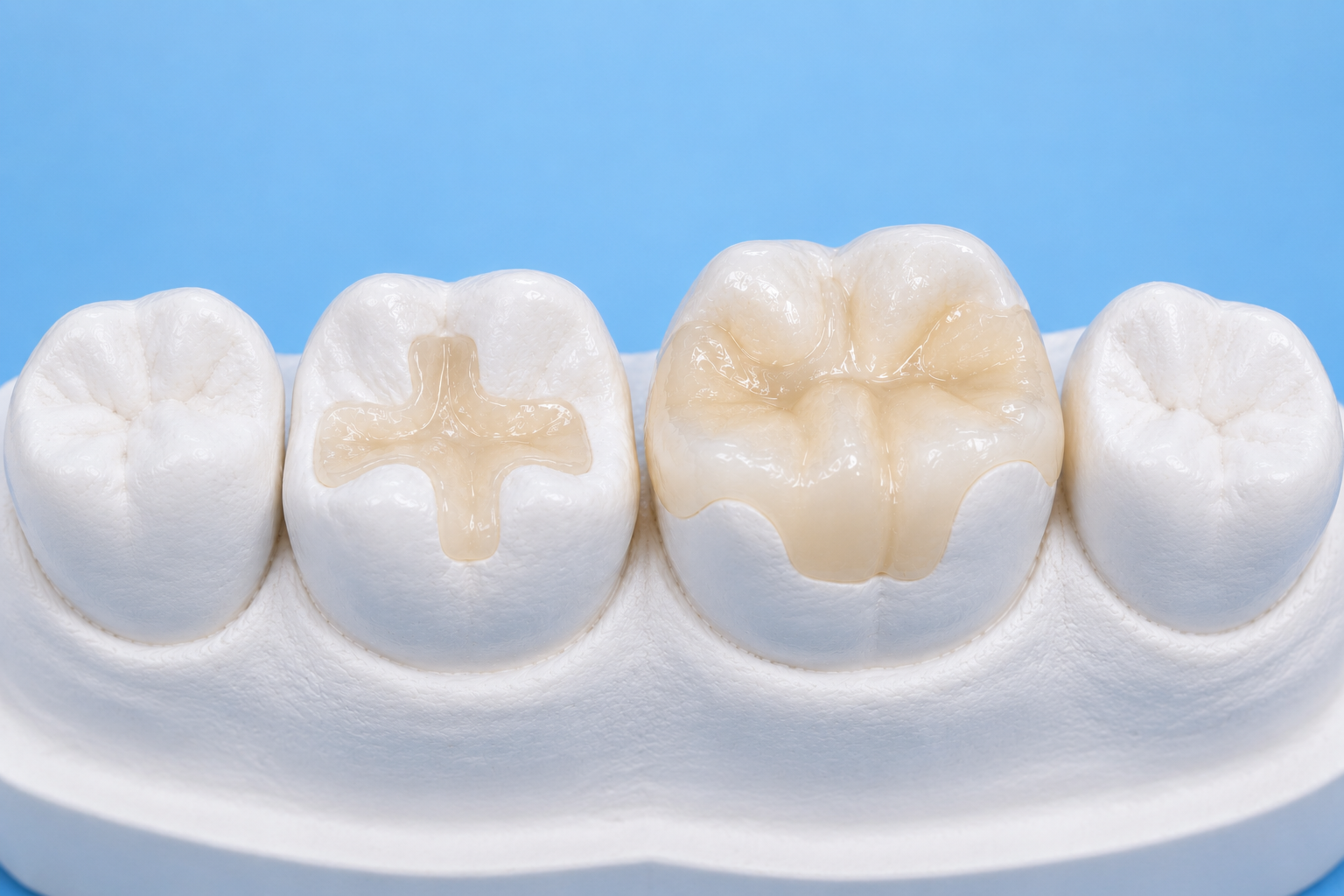
Indirect porcelain restoration
Sometimes the tooth needs something more precise than a direct filling.
Lab-made restorations are useful when the damaged area is too extensive for a regular filling but the tooth can still be rebuilt conservatively.
Inlays versus onlays
They are both indirect restorations. The exact design depends on how much of the tooth needs rebuilding.
The source page groups inlays and onlays together as custom porcelain restorations cemented onto the tooth when additional strength and support are needed beyond a regular filling.
- Treatment is completed over two visits because the restoration is fabricated in a dental laboratory.
- The aim is to restore the chewing surface, natural shape, and strength of the tooth.
- The source page describes them as generally stronger and more durable than direct fillings because they are made from high-strength materials outside the mouth.
Common questions
Inlay and onlay questions, answered clearly.
These are the questions patients usually ask when they hear the tooth may need more than a regular filling.
Related services
Related care patients often explore alongside this service.
Depending on your goals and clinical needs, these are other treatments patients commonly consider with us.

Tooth Coloured Fillings
White composite and ceramic fillings restore damaged or decayed teeth while maintaining a natural, aesthetically pleasing smile using modern dental materials and techniques.
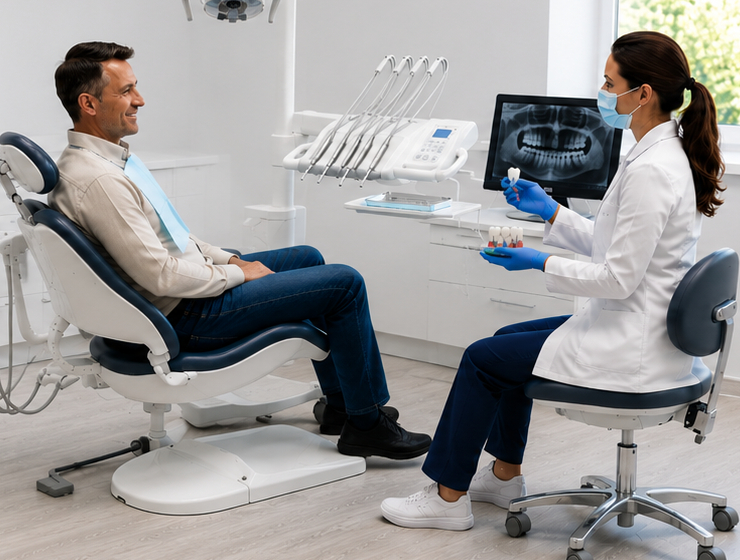
Crown & Bridge
Do you have cracked, damaged or missing teeth? Crowns and bridges can help you.
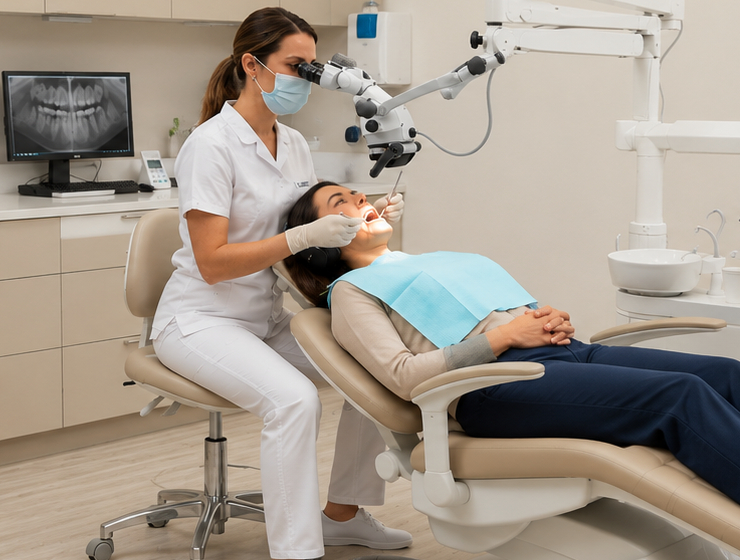
Root Canal Treatment
We like to see your teeth in optimum health at all times, however in the case of infection we can treat the tooth to restore function.
Dentalini
Strengthen larger cavities with a custom porcelain repair when a regular filling is no longer enough.
Book online or contact the clinic to discuss whether an inlay or onlay is the right way to restore the tooth.