
Endodontic tooth-saving care
Root Canal Treatment
Root canal treatment is used to save a tooth when the nerve and blood tissues inside it become diseased or infected, with treatment planned in stages to clean the tooth and restore function.
- Infected tooth assessment
- Staged endodontic treatment
- Crown restoration after care

Why patients need root canal treatment
The goal is to treat infection and give your natural tooth a chance to stay.
Save the natural tooth
Prompt root canal treatment may give an infected tooth the best chance of being preserved rather than removed.
Treat infection inside the tooth
The diseased or infected pulp is cleaned out so the infection is less able to continue down the root toward the bone.
Relieve pain and discomfort
Treatment is commonly needed when infection causes pain, throbbing, sensitivity, or abscess formation.
Restore function after treatment
After the root canal is filled, a crown is commonly made to restore and protect the tooth.
Follow a clear staged plan
Root canal care usually happens over a series of visits so the infected pulp and bacteria can be adequately treated.
What treatment involves
Root canal treatment is usually completed in stages, not all at once.
Your dentist will first confirm whether root canal treatment is necessary, then plan a sequence of visits to clean the inside of the tooth, control infection, and restore the tooth afterward.
- 1
Step 1
Examine the tooth with X-rays and tests
The first step is to assess the painful or infected tooth, take X-rays, and carry out tests where needed to confirm whether root canal treatment is necessary.
- 2
Step 2
Start treatment promptly
When the pulp is diseased or infected, timely treatment gives the tooth the best chance of being saved.
- 3
Step 3
Remove the infected pulp
The diseased nerve and blood tissues are removed from inside the tooth so the infection can be cleaned out properly.
- 4
Step 4
Fill the root canal system
Once the inside of the tooth has been cleaned, it is filled with an inert material to help seal and stabilise it.
- 5
Step 5
Restore the tooth with a crown
After the canal is filled, a crown is commonly fabricated to protect the tooth and support normal function.
What your appointment covers
Clear steps, without guesswork.
- Examine the tooth with X-rays and tests
- Start treatment promptly
- Remove the infected pulp
- Fill the root canal system
- Restore the tooth with a crown
Every stage is planned around your comfort, clinical needs, and the next step that makes sense for your care.
Tooth pain that feels persistent?
Book promptly if you think an infected tooth may need root canal treatment.
A review with X-rays and testing can clarify whether the tooth can be saved and what the staged treatment would involve.
Signs to watch for
These symptoms commonly lead to a root canal assessment.
Tooth infection does not always feel the same for every patient, but these are some of the more common warning signs.
Sensitivity to hot and cold
Lingering sensitivity to hot or cold foods and drinks can be a sign the tooth pulp is inflamed or infected.
Constant throbbing pain
Ongoing throbbing tooth pain is a common reason patients book an assessment promptly.
Pain when biting or chewing
Discomfort under pressure can point to inflammation or infection within the tooth.
Abscess or pus near the tooth
Swelling or pus in the gum around the tooth can indicate that infection has spread beyond the inside of the tooth.
A deep cavity or heavy decay
Deep decay is one of the common pathways by which the pulp becomes diseased or infected.
You want to avoid losing the tooth
If the aim is to save your natural tooth where possible, it is important to have the problem assessed promptly.
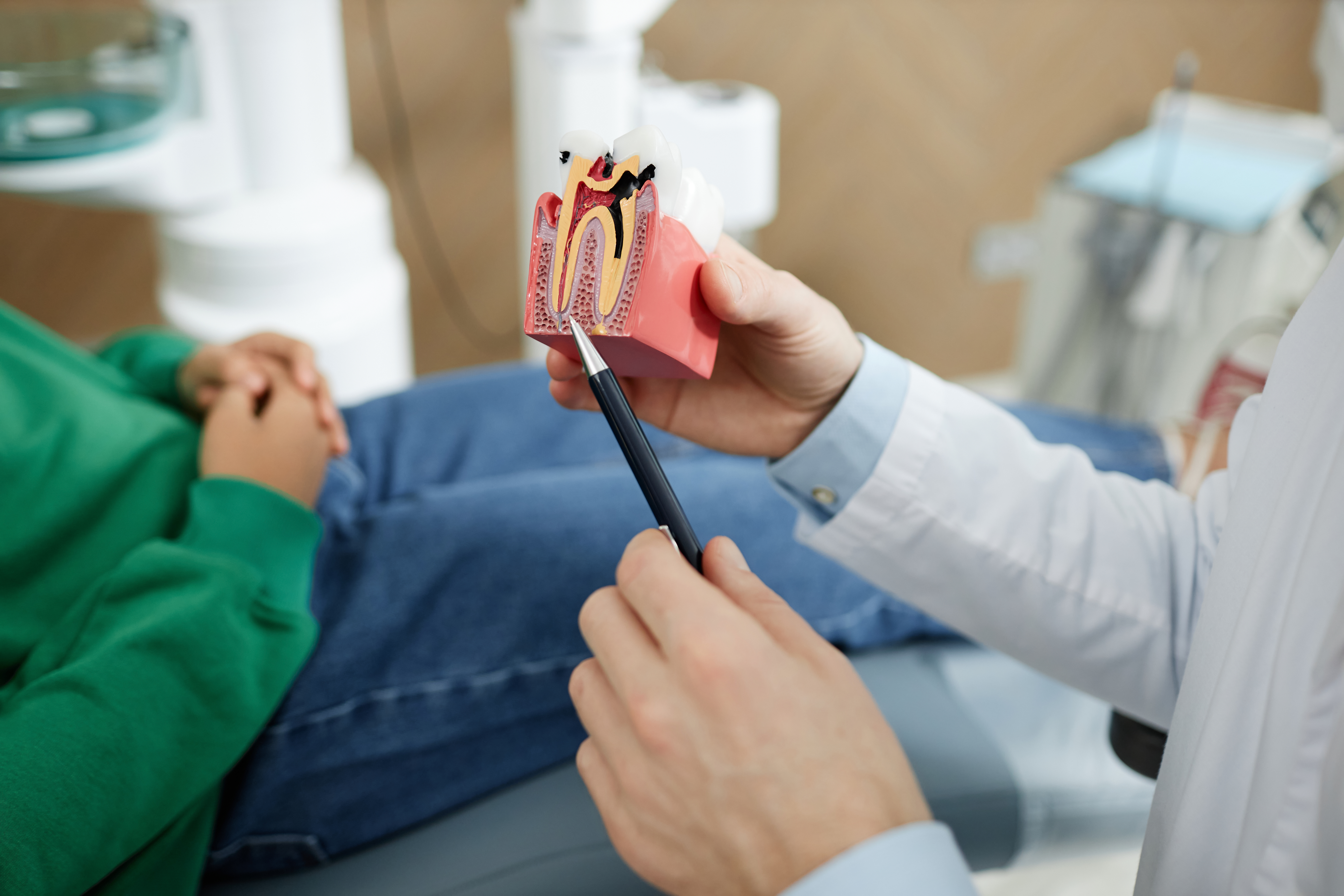
Endodontic care
Saving the tooth comes first, then restoring it well.
Root canal treatment focuses on cleaning infection thoroughly, then rebuilding the tooth for function.
How root canal treatment works
The infection is treated from inside the tooth, then the tooth is rebuilt.
Root canal treatment is a sequence of care that removes infected pulp, cleans the inside of the tooth, and fills the space with an inert material. Because infection and drainage need to be managed properly, treatment is often spread over several visits rather than completed in a single sitting.
- Root canal treatment is usually needed when the pulp becomes diseased or infected and causes pain, discomfort, or abscess formation.
- The aim is to prevent infection from continuing down the root and affecting the surrounding bone.
- A crown is commonly made after treatment to complete the restoration of the natural tooth.
Common questions
Root canal questions, answered clearly.
Patients usually want to know why the treatment is needed, how it is staged, and what happens to the tooth afterward.
Related services
Related care patients often explore alongside this service.
Depending on your goals and clinical needs, these are other treatments patients commonly consider with us.

Crown & Bridge
Do you have cracked, damaged or missing teeth? Crowns and bridges can help you.

Emergency Dental Care
If you have pain, it's an emergency!

Tooth Extractions
Sometimes if a tooth is beyond repair due to advanced decay, damage, or gum disease, extraction may be recommended to protect your oral health and prevent further complications.
Dentalini
Get infected or damaged teeth assessed early so the next step can be planned clearly.
Book online or contact the clinic to arrange a root canal assessment and staged treatment plan if needed.