Removable tooth replacement
Dentures
Dentures replace missing teeth in the upper or lower arch when a removable option is the right fit, helping restore smile appearance, chewing function, and day-to-day comfort.
- Complete and partial denture options
- Smile and chewing support
- An option when implants are not suitable
Why patients choose dentures
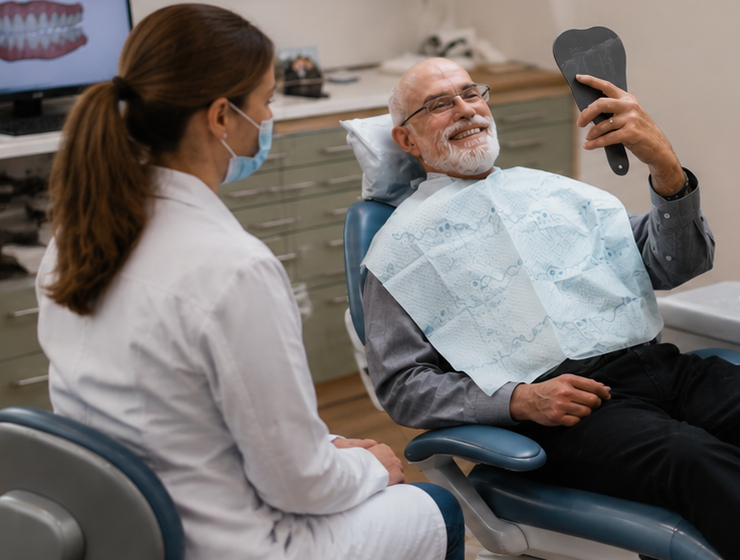
Dentures are often about restoring daily function as much as appearance.
Replace missing teeth
Dentures are prosthetic appliances used to replace missing teeth in the upper or lower arch.
Support chewing and speech
Dentures can help support chewing ability and speech when missing teeth are affecting daily function.
Support facial structure
Dentures can help support facial muscles and improve the overall appearance of the smile.
Use a treatment option when implants are not suitable
Dentures remain an option when dental implants are not suitable or not preferred for medical, dental, or practical reasons.
Restore confidence after tooth loss
Many patients consider dentures because they want to feel more comfortable smiling and eating again.
How denture planning usually works
The key decision is whether the denture needs to replace all teeth or only some.
Denture treatment starts with understanding how many teeth are missing, what support remains, and whether a complete or partial design is more appropriate.
- 1
Step 1
Review what needs to be replaced
We begin by assessing the upper or lower arch and clarifying whether the need is for full replacement or to fill specific spaces.
- 2
Step 2
Decide between complete and partial dentures
A complete denture replaces all natural teeth in an arch, while a partial denture fills gaps and works around the remaining teeth.
- 3
Step 3
Take records for the denture design
The design is based on your mouth, remaining support, and the fit needed for comfort and function.
- 4
Step 4
Fit the removable appliance
The denture is fitted to restore the smile, support the bite, and help with speech and chewing as much as possible.
- 5
Step 5
Review comfort and function
Follow-up helps fine-tune comfort and practical day-to-day use as you adapt to the appliance.
What your appointment covers
Clear steps, without guesswork.
- Review what needs to be replaced
- Decide between complete and partial dentures
- Take records for the denture design
- Fit the removable appliance
- Review comfort and function
Every stage is planned around your comfort, clinical needs, and the next step that makes sense for your care.
Considering dentures?
Book a consultation to work out whether a complete or partial denture is the better fit for your mouth.
We can review the missing teeth, discuss removable options clearly, and explain where dentures fit compared with other replacement treatments.
When patients ask about dentures
These are the most common reasons dentures come into the discussion.
Some patients need to replace an entire arch, while others need a removable option for a number of gaps left by missing teeth.
You have lost multiple teeth
Dentures are commonly used when there are enough missing teeth that a removable replacement option becomes practical.
You need to replace all teeth in an arch
A complete denture is designed to replace all natural teeth in the upper and or lower arch.
You have spaces between remaining teeth
A partial denture can be used to fill vacancies while being supported by clasps on remaining teeth.
Chewing or speech feels affected
Chewing and speech are two of the main day-to-day concerns that often lead patients to ask about dentures.
You want a removable option
Some patients prefer or need a removable tooth replacement rather than a fixed treatment path.
Implants are not the right option
Dentures may be considered when implants are not suitable because of medical, dental, or financial reasons.
Removable replacement care
The right denture plan depends on what support remains.
Good denture planning balances appearance, support, removability, and the way the appliance will function in daily life.
Complete versus partial dentures
Both are removable, but they solve different tooth-loss patterns.
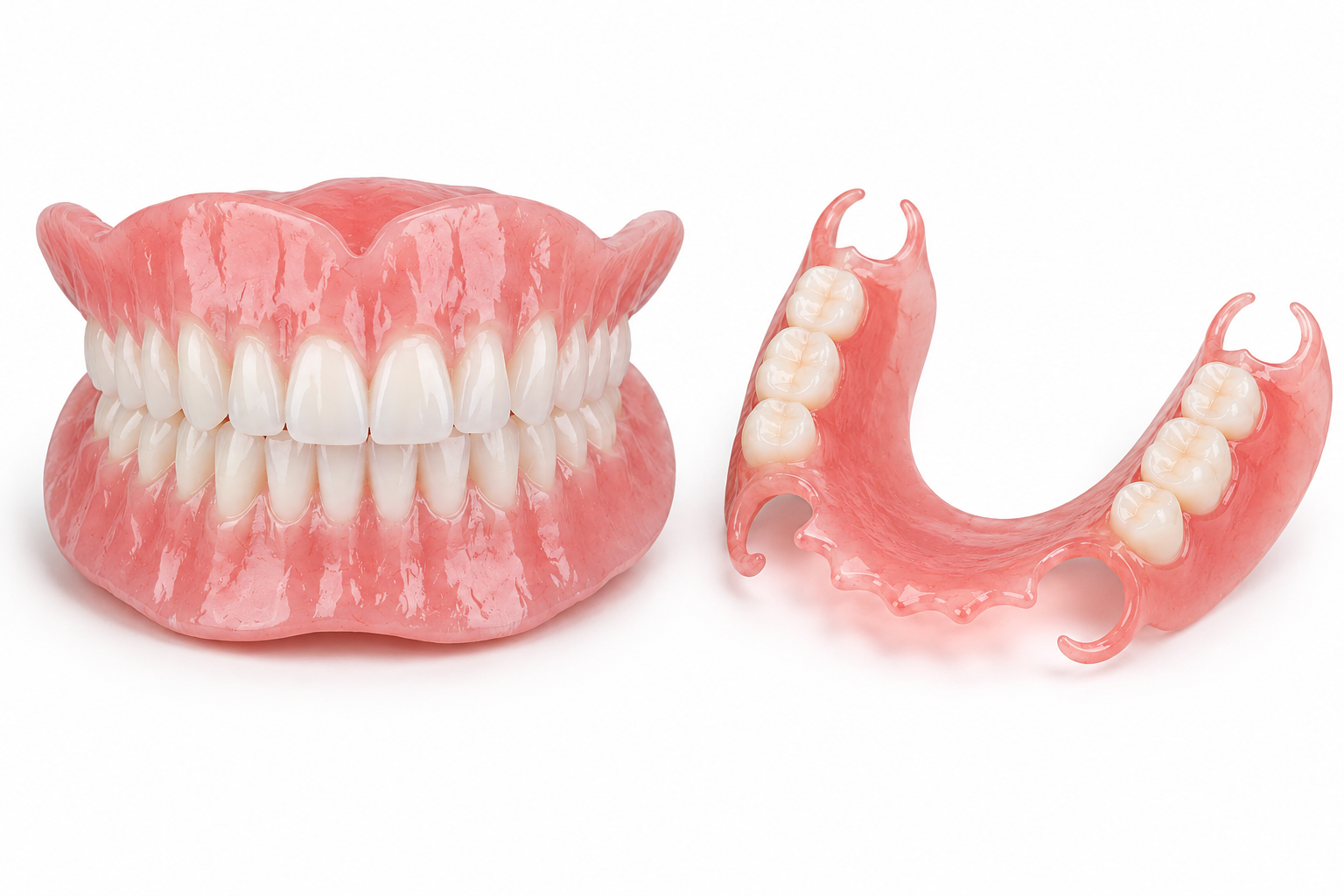
Complete dentures replace all natural teeth in an arch, while partial dentures fill spaces between remaining teeth and are supported by the teeth that remain.
- Dentures may help support facial appearance, facial muscles, chewing ability, and speech, depending on the design and the amount of support available.
- Dentures are described as an acrylic prosthetic device used to replace missing teeth in the upper or lower arch.
- They remain an important treatment option when implants are not suitable or not preferred.
Common questions
Denture questions, answered clearly.
These are the questions patients usually ask when they are weighing dentures against other replacement options.
Related services
Related care patients often explore alongside this service.
Depending on your goals and clinical needs, these are other treatments patients commonly consider with us.
Dental Implants
Missing teeth? Let's fix that! Dental implants are a permanent solution that look and feel like natural teeth! Whether you've lost a tooth/teeth due to injury, decay, or age, implants can restore your smile and confidence!
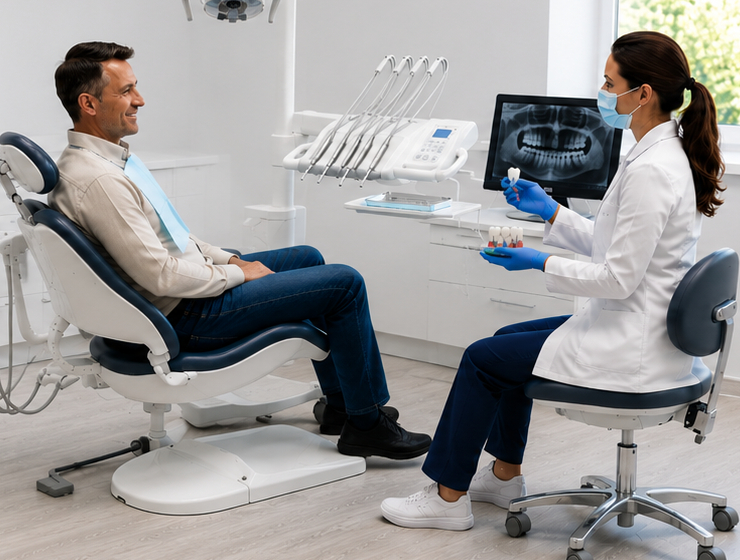
Crown & Bridge
Do you have cracked, damaged or missing teeth? Crowns and bridges can help you.
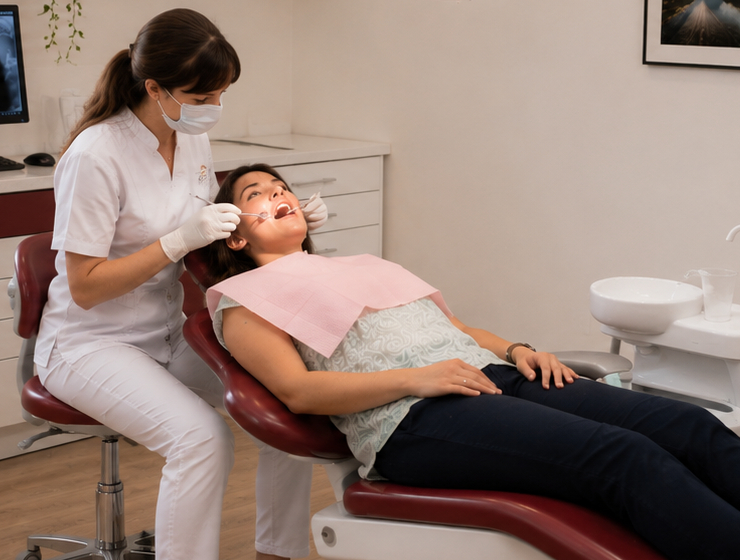
Tooth Extractions
Sometimes if a tooth is beyond repair due to advanced decay, damage, or gum disease, extraction may be recommended to protect your oral health and prevent further complications.
Dentalini
Replace missing teeth with a removable option that suits how much support your mouth still has.
Book online or contact the clinic to discuss complete and partial dentures and where they fit among your replacement options.